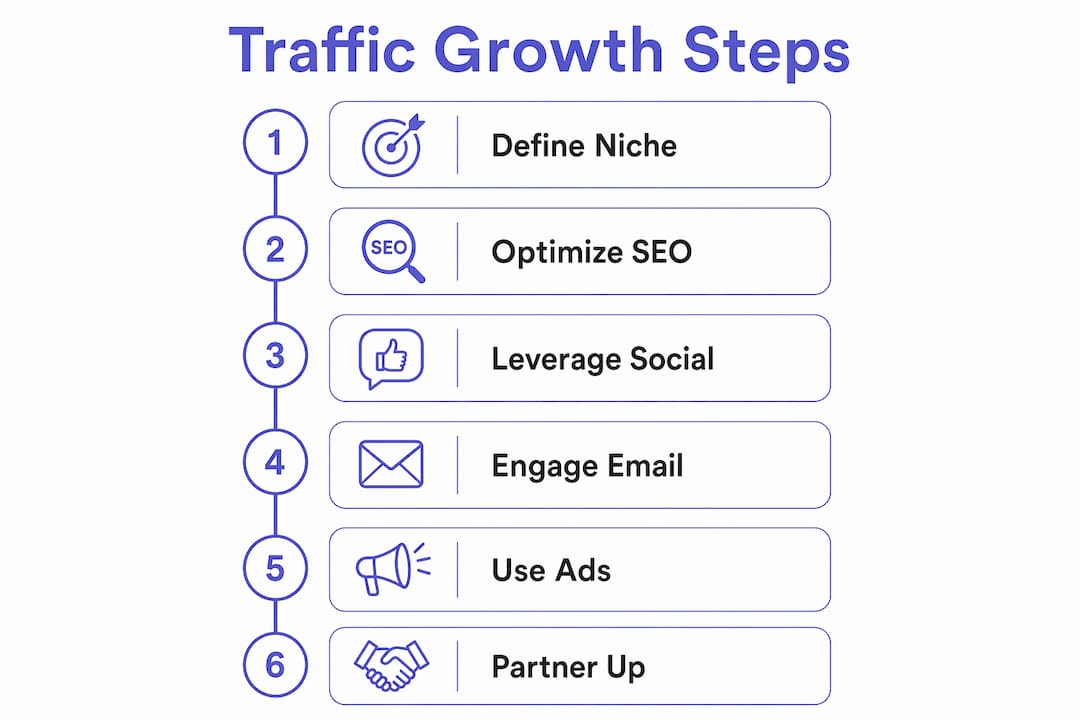
The most effective way to drive traffic to your coaching website combines niche-specific SEO content, focused social media presence, email list building, and selective paid advertising. None of these channels work in isolation. What makes them compound is niche clarity: when your site speaks directly to one type of client with one specific problem, every traffic source converts at a higher rate. Here is what that looks like in practice:
- SEO content targets the exact questions your ideal clients type into Google, pulling in high-intent visitors who are already looking for what you offer
- Social media builds trust and directs followers to your site, but only when you show up on the right platform with the right message
- Email marketing creates repeat visits and warms leads until they are ready to book
- Paid ads accelerate visibility when organic growth is still building
- Conversion-focused website design turns that traffic into actual discovery calls
Most coaching websites receive little to no traffic from Google. The strategies below fix that.
Table of Contents
- How to drive traffic to your coaching website with SEO content
- How does social media actually increase coaching website visitors?
- What email marketing does for coaching website traffic
- Paid advertising strategies that actually boost coaching site traffic
- How to turn coaching website visitors into booked calls
- How partnerships with complementary businesses grow your coaching reach
- Why blogging and guest posting still drive coaching clients
- How webinars and free workshops attract coaching clients
- Key Takeaways
- What most coaches get wrong about website traffic
- Your coaching website should work as hard as you do
How to drive traffic to your coaching website with SEO content
The fastest path to sustainable coaching website traffic is ranking for the specific questions your clients are already searching. Broad terms like “life coach” or “business coach” are too competitive and attract the wrong visitors. Long-tail keywords, phrases like “executive coach for tech founders in Austin” or “career coach for nurses changing industries,” have lower competition and far higher conversion potential.
SEO leads for coaches convert at nearly 15%, significantly outperforming outbound methods like cold outreach, which average 1.7% conversion. That gap exists because search captures intent. Someone typing “how to stop avoiding difficult conversations as a new manager” is not browsing. They have a problem and they want help now.
To build topical authority, structure your content around pillar pages and cluster articles:
- Pillar page: A comprehensive guide on your core coaching topic (e.g., “The Complete Guide to Leadership Coaching for First-Time Managers”)
- Cluster articles: Specific posts that answer related questions (e.g., “How to Give Feedback Without Damaging Trust,” “Managing Up When Your Boss Is Disorganized”)
- Internal linking: Connect every cluster article back to the pillar page so Google sees your site as an authority on the subject
On-page SEO elements matter just as much as the content itself. Every page needs a keyword-rich title tag under 60 characters, a meta description under 160 characters that earns the click, a clear H1 that states your value, and schema markup so Google understands who you are and what you offer. Google’s E-E-A-T framework (Experience, Expertise, Authoritativeness, Trustworthiness) rewards coaches who demonstrate real credentials, publish case studies, and link their content to a detailed author profile.
Pro Tip: Go back to your three best-performing articles every quarter and update them with fresh data, new examples, and any questions clients have asked recently. A well-ranked article can generate leads for years without new production costs.
How does social media actually increase coaching website visitors?
Social media works for coaches when it is specific and consistent, not when it is frequent and generic. Posting regularly on LinkedIn with experience-backed insights generates more coaching leads than frequent motivational quotes. The algorithm rewards specificity. A post that says “Here is what I learned coaching 12 engineering managers through their first performance review cycle” outperforms “Believe in yourself” every time.
Pick one or two platforms where your ideal clients actually spend time. Executives and B2B clients are on LinkedIn. Fitness, nutrition, and mindset coaches find their audience on Instagram. Trying to maintain five platforms at once usually means doing all of them poorly.
- Optimize your bio and profile links to point directly to a high-value landing page or lead magnet, not just your homepage
- Engage in niche communities on Facebook Groups, Reddit, or LinkedIn Groups where your ideal clients ask questions. Answer genuinely, without pitching, and your profile becomes a referral source
- Share client outcomes in specific, concrete terms. “My client significantly increased their discovery calls in a short period.” is more persuasive than any motivational caption
- Use posts to pre-qualify visitors. Content that addresses a specific pain point filters out the wrong audience before they ever land on your site
Consistency over volume: a sustainable posting schedule is more effective than high-frequency content that leads to burnout.
What email marketing does for coaching website traffic

Email is the only channel you fully own. Social platforms change their algorithms. Ad costs fluctuate. Your email list stays yours. Building it with the right lead magnet is the first step.
Quizzes, templates, and mini reports outperform generic PDF guides because they deliver immediate, specific value. A short, interactive leadership readiness assessment provides immediate value and useful data for intake. That specificity is what drives opt-ins and builds trust before the first call.
- Segment your list by client type or challenge so your emails feel personal, not broadcast
- Send consistently with a mix of education, inspiration, and a clear next step. Every email should link back to a relevant page on your site
- Automate a welcome sequence of 5–7 emails for new subscribers. Each email teaches something useful and moves the reader closer to booking a discovery call
- Write your lead magnet title around a keyword your ideal client would search. A resource called “The SaaS Founder’s Cold Email Playbook” works as both a list-building tool and an organic search asset
The goal is not a large list. It is a list of people who match your niche and hear from you often enough to trust you when they are ready to hire.
Paid advertising strategies that actually boost coaching site traffic
Paid ads work best as an accelerant, not a foundation. If your organic content and website conversion are not yet working, ads will just send expensive traffic to a page that does not convert. Get those fundamentals right first, then use ads to scale what is already working.
Google Ads and Facebook/Instagram Ads are the two platforms worth testing for most coaches. Google captures active intent. Someone searching “executive coach for healthcare leaders” is ready to evaluate options. Facebook and Instagram let you target by job title, industry, interests, and behavior, which works well for awareness-stage campaigns.
- Narrow your audience targeting to match your niche exactly. A broad audience wastes budget; a tight one produces qualified leads
- Test two or three ad variations with different headlines and creative. Lead with a specific client result, not a generic offer
- Set a clear cost-per-lead target before you launch and track it weekly. If a campaign is not hitting that number after two weeks, pause and adjust
- Retarget website visitors with follow-up ads. Someone who visited your services page but did not book is a warm lead. A retargeting ad with a specific offer or testimonial often closes that gap
Keep your ad budget focused on one campaign at a time until you have proof it works. Spreading a small budget across multiple campaigns produces data too thin to act on.
How to turn coaching website visitors into booked calls
Getting traffic to your site is only half the job. If visitors land and leave without taking action, the traffic is worthless. Most coaching websites lose clients not because of bad SEO but because the site does not answer three questions fast enough: Who is this for? What will I get? How do I start?
Conversion optimization through fast, mobile-friendly design and compelling calls to action directly improves discovery call booking rates. Every page on your site should have one clear next step, positioned where the visitor does not have to scroll to find it.
- Lead magnets tied to client pain points capture email addresses from visitors who are not ready to book yet, keeping them in your funnel
- Social proof sections with specific testimonials (“She helped me go from 3 clients to 12 in four months”), case studies, and credentials build trust before a visitor ever reaches your contact page
- Fast load times matter more than most coaches realize. Visitors abandon a site that takes more than three seconds to load, and Google penalizes slow sites in rankings
- A high-converting landing page for each service, with a specific headline, clear outcome statement, and a single CTA, outperforms a generic services page every time
For local coaches, a fully optimized Google Business Profile is the fastest path to local search visibility. A strong profile with client reviews and local keyword focus can outperform complex SEO for “near me” searches. Run a free GBP audit to see exactly where your profile stands before investing time elsewhere.
Pro Tip: Connect Google Analytics and Google Search Console to your site from day one. Check both weekly. Look for pages with high traffic but low conversions — those are your biggest opportunities. A page getting 200 visits per month with zero bookings tells you the content is working but the CTA is not.

How partnerships with complementary businesses grow your coaching reach
Strategic partnerships are one of the most underused traffic sources in coaching. If you coach business owners, the accountants, brand designers, and copywriters serving those same clients already have their trust. A genuine referral relationship with two or three of those professionals can produce a steady stream of warm leads that no ad campaign can replicate.
The key is reciprocity. Refer clients to your partners when it fits, and they will do the same. Guest on each other’s email newsletters, co-host a webinar, or create a joint resource. Each collaboration puts you in front of an audience that already trusts the person introducing you. That borrowed credibility shortens the sales cycle considerably.
Coaching directories and professional associations like the International Coaching Federation also provide referral traffic and authoritative backlinks that strengthen your site’s domain authority over time.
Why blogging and guest posting still drive coaching clients
A blog post answering a question your ideal client is actively searching creates a permanent entry point to your site. Your homepage might rank for “executive coach in Nashville.” A blog post titled “How to Know If You Are Ready for a Career Change” ranks for that question independently and sends a different stream of visitors. The more quality content you publish, the more ways Google has to find you.
A well-optimized article can generate leads for years without ongoing production costs. That compounding effect is what separates SEO from social media, where content has a shelf life measured in hours.
Guest posting on industry publications, business blogs, and podcast show notes builds backlinks and puts your name in front of established audiences. Each guest post is a vote of confidence in Google’s eyes and a direct referral from a trusted source. Aim for publications your ideal clients actually read, not just any site that will accept a submission. When you appear on a podcast, ask for a link in the show notes. When you write a guest article, link to a relevant resource on your site, not just your homepage.
For more on building a content-driven coaching site, the step-by-step coaching website guide from Cosmicdigitalstudios walks through exactly how to structure pages for both search and conversion.
How webinars and free workshops attract coaching clients
A free webinar or live workshop does something a blog post cannot: it lets a prospective client experience your coaching style before committing to a paid engagement. That direct exposure builds trust faster than any written content. Coaches who run monthly webinars on a specific niche problem consistently report higher discovery call conversion rates from those attendees than from cold organic traffic.
The topic matters. “How to Stop Avoiding Difficult Conversations as a New Manager” will fill seats. “Introduction to Coaching” will not. Specificity is what makes someone clear their calendar to attend.
After the live event, record it and repurpose it. A recorded webinar becomes a lead magnet, a YouTube video, a series of social clips, and a source of blog content. One 60-minute session can feed your content calendar for weeks. Drive traffic to the registration page with email campaigns, social posts, and paid ads targeting your exact niche audience. The registration page itself becomes an SEO asset if you optimize it around the webinar topic.
Key Takeaways
Driving qualified traffic to a coaching website requires niche clarity, SEO-optimized content, and a site built to convert visitors into booked calls, not just attract them.
| Point | Details |
|---|---|
| Niche clarity multiplies results | Specific positioning makes every traffic channel more effective and raises conversion rates across the board. |
| SEO leads convert at nearly 15% | Organic search captures high-intent clients; long-tail keywords outperform broad terms for both ranking and conversion. |
| Email and social work together | Lead magnets grow your list; focused social media on one or two platforms drives consistent referral traffic to your site. |
| Paid ads amplify what works | Use Google Ads and Facebook/Instagram Ads only after organic conversion is proven; retarget warm visitors for best results. |
| Cosmicdigitalstudios builds conversion-ready sites | Custom coaching websites and landing pages designed to turn traffic into discovery calls, not just look professional. |
What most coaches get wrong about website traffic
The conventional wisdom says more traffic equals more clients. Coaches chase follower counts, post daily, and run ads before their site is ready to convert anyone. The traffic arrives and leaves. Nothing books.
The real problem is almost always the same: the site is built for credibility, not conversion. It lists credentials, explains the coaching philosophy, and ends with a contact form buried at the bottom. A visitor who does not immediately understand who the site is for and what happens next will leave in under 30 seconds.
Niche clarity fixes this faster than any traffic tactic. When your homepage headline says “I help first-time engineering managers stop avoiding difficult conversations,” the right visitor feels seen immediately. The wrong visitor self-selects out. Your conversion rate goes up not because you got more traffic but because the traffic you have is better matched to what you offer.
The other thing coaches underestimate is the compounding nature of SEO content. Social posts disappear. Ads stop when the budget runs out. A well-written article targeting a specific long-tail keyword keeps working for years. The coaches who build the most durable practices are the ones who treat their website as a long-term asset, not a digital business card.
Traffic without conversion is just a vanity metric. Build the site to convert first, then drive traffic to it.
Your coaching website should work as hard as you do
Most coaches are one well-built website away from a consistent flow of discovery calls. The gap is not effort. It is structure. A site that loads fast, speaks directly to your ideal client, and guides every visitor toward a clear next step does the selling while you focus on coaching.
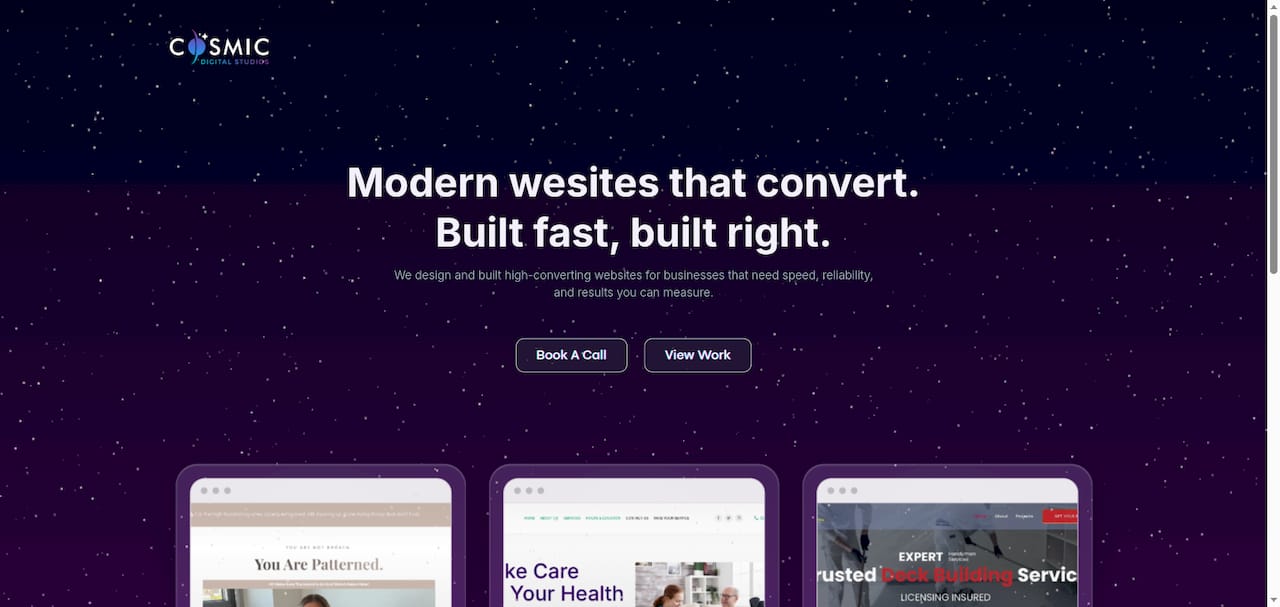
Cosmicdigitalstudios builds custom coaching websites and conversion-focused landing pages designed specifically for coaches who want traffic to turn into clients. Every build includes clean design, clear messaging, and a funnel structure that moves visitors from curious to booked. No generic templates. No guesswork on layout or copy structure.
If your current site is not producing discovery calls at the rate your traffic should support, the coaching website conversion guide is a good place to start. Or skip straight to the fix: get a custom coaching website built to convert from day one.