
Your website is a referral engine. Businesses that treat it as one, rather than a digital brochure, can generate referrals through their website consistently and at scale. Referral marketing, the industry term for systematically turning satisfied clients and partners into new leads, requires more than a “Tell a Friend” button buried in your footer. It demands clean tracking, dedicated landing pages, compelling incentives, and ongoing promotion. Referral links compound over time, meaning each new referral source makes the next one easier to earn. This guide gives you the exact framework to build that system.
What does your website need to generate referrals effectively?
The foundation of any website referral strategy is clean data. Without it, you cannot tell which sources send quality visitors and which send noise. UTM parameters, the tracking tags you append to URLs, let you label every referral source in Google Analytics. Clean UTM naming conventions, such as utm_source=partner_name&utm_medium=referral, prevent data from collapsing into the dreaded “direct” bucket.
A dedicated referral landing page is the second non-negotiable. This page explains the program, shows the reward, and gives visitors one clear action to take. A lead generation website treats every page as a conversion opportunity. Your referral page should do the same: one headline, one offer, one button.

Content assets are the third pillar. Original, data-driven content such as industry benchmarks or surveys attracts inbound links from other sites. A survey with as few as 200 responses can produce a linkable, citable asset. That asset then becomes a passive referral source as other sites link to it.
| Asset | Purpose | Example |
|---|---|---|
| UTM-tagged referral URLs | Track source and quality of each referral | ?utm_source=partner&utm_medium=referral |
| Dedicated referral landing page | Convert referred visitors into leads | Single-offer page with clear CTA |
| Original data or benchmark report | Attract inbound links from other sites | Industry salary survey, usage report |
| Referral form or widget | Capture referral submissions on-site | Embedded form in user dashboard |
How to create and launch a referral program for your website
A referral program for websites works best when both parties win. Double-sided reward models motivate the advocate and the new client equally, making the referral feel like a gift rather than a sales tactic. A service business might offer the referring client a $50 credit and the new client a free consultation. That structure removes the awkwardness of asking someone to promote you.
Here is the step-by-step process to launch:
- Define your incentive. Choose a reward that costs you little but feels valuable to the recipient. Discounts, credits, and free upgrades all work. Cash works too, but credits tend to increase retention.
- Create unique referral codes or URLs. Assign each advocate a personalized link such as
yoursite.com/ref/janedoe. This ties every conversion directly to the source without manual tracking. - Build your referral landing page. Keep it to one screen if possible. State the offer in the headline, explain the steps in three bullet points, and place the form above the fold.
- Embed referral prompts across your site. Place referral links in email signatures, post-purchase confirmation pages, client dashboards, and homepage banners. The more natural touchpoints you create, the more referrals you capture.
- Automate reward fulfillment. Manual reward processing kills programs. Use your CRM or email platform to trigger reward emails automatically when a referral converts.
Pro Tip: Refresh your referral landing page headline and offer framing every 3–4 weeks. Program fatigue sets in quickly, and a small copy change can re-engage advocates who stopped sharing.
How do you promote a referral program and keep it growing?
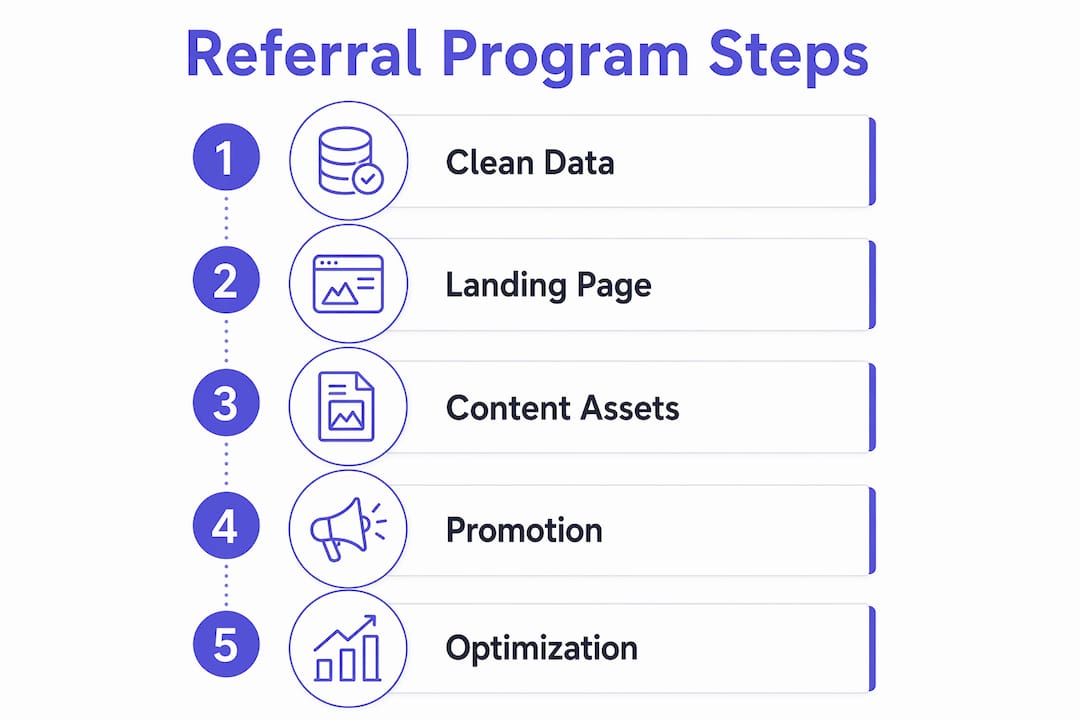
Building the program is only half the work. Active promotion is the key failure point for most referral programs. Businesses launch, announce once, and then watch participation drop to zero within a month. Sustained growth requires consistent, multi-channel promotion.
The most effective promotion channels for a website referral program are:
- Email marketing. Send a dedicated referral program announcement to your list. Follow up with a reminder 30 days later. Include a referral link in every transactional email you send.
- Post-purchase pages. The moment after a client buys is your highest-trust touchpoint. A post-purchase page that says “Love what you got? Share it and earn $50” converts at a far higher rate than a cold email.
- Homepage banners. A persistent, dismissible banner keeps the program visible to returning visitors without disrupting new visitor flow.
- Social media. Share client success stories and tag the referral program. User-generated content from happy clients is the most credible promotion you can run.
- Partner outreach. Identify complementary businesses and creators whose audiences overlap with yours. Pitch a cross-referral arrangement where you each link to the other’s referral page. These relationships build a referral network online that generates traffic long after the initial outreach.
Avoid the “build it and forget it” trap. Schedule a recurring calendar block, even 30 minutes per week, to answer forum questions, pitch guest posts, and follow up with partners. Consistent weekly referral activities compound into dramatic growth over a six-month period.
How do you optimize your referral program for ongoing results?
Businesses that focus on qualified referral sessions rather than raw click volume can achieve 77% growth in referral traffic within 90 days. That number reflects a shift in mindset: quality over quantity. A thousand clicks from a misaligned partner are worth less than 50 clicks from a perfectly matched one.
The metrics that matter are engaged sessions, time on page, and conversion rate. Not total visits. Define a “qualified referral” as a visitor who spends more than 60 seconds on your referral landing page and completes the form. Track that number weekly, not monthly.
Referral traffic quality is more important than volume. This means your optimization work should focus on the landing page experience first. Faster page load speeds directly improve conversion rates on referral pages. A page that loads in under two seconds retains far more referred visitors than one that takes four seconds.
Small improvements to link placement, offer framing, and page load speed can lift referral performance by 10–20%. That is not a small number when compounded across dozens of referral sources.
| Generic approach | Optimized tactic |
|---|---|
| Track total referral clicks | Track engaged sessions and conversion rate |
| One static landing page | A/B test headlines and offer framing monthly |
| Refresh program annually | Refresh messaging every 3–4 weeks |
| Ignore unlinked mentions | Convert unlinked mentions into active referral links |
| Treat all partners equally | Identify and nurture top-performing referral partners |
Monitoring unlinked brand mentions is one of the highest-return activities in referral optimization. When another site mentions your business without linking to you, a short, personalized outreach email asking them to add the link converts at a surprisingly high rate. Tools like Google Alerts make finding these mentions free and automatic.
Key Takeaways
A website referral program succeeds when it combines clean tracking, a compelling double-sided incentive, consistent multi-channel promotion, and weekly optimization focused on qualified sessions rather than raw traffic volume.
| Point | Details |
|---|---|
| Clean tracking is non-negotiable | Use UTM parameters to identify which referral sources send quality visitors. |
| Double-sided rewards drive participation | Reward both the advocate and the new client to make referrals feel natural. |
| Promotion must be continuous | Announce the program across email, social, and post-purchase pages every month. |
| Optimize for quality, not volume | Track engaged sessions and conversion rate, not total referral clicks. |
| Refresh messaging every 3–4 weeks | Stale offers cause program fatigue and drop participation fast. |
What I’ve learned about referral systems that most guides skip
Most articles on referral marketing treat it like a campaign. Set it up, run it for a quarter, measure results, move on. That framing is exactly why most referral programs fail quietly.
The businesses I’ve seen build genuine referral pipelines treat it like infrastructure. They assign someone to own it. They review partner performance monthly. They send a personal thank-you to every advocate who sends a qualified lead. That last part sounds small. It is not. A handwritten note or a personal email to a referring partner produces more repeat referrals than any automated reward system.
The other mistake I see constantly is chasing vanity metrics. A spike in referral traffic feels good. But if those visitors bounce in 10 seconds, the spike means nothing. Sustainable referral growth requires clear, measurable guardrails. Define what a good referral looks like before you launch, not after you’re disappointed by the numbers.
The businesses that win at referral marketing are not the ones with the flashiest programs. They are the ones that convert website visitors consistently and then make it easy for those clients to share. Consistency beats creativity every time in this game.
— Max
How Cosmicdigitalstudios builds websites that earn referrals
Your referral program is only as strong as the website behind it. A slow, confusing site kills referred visitors before they convert, no matter how good your incentive is.
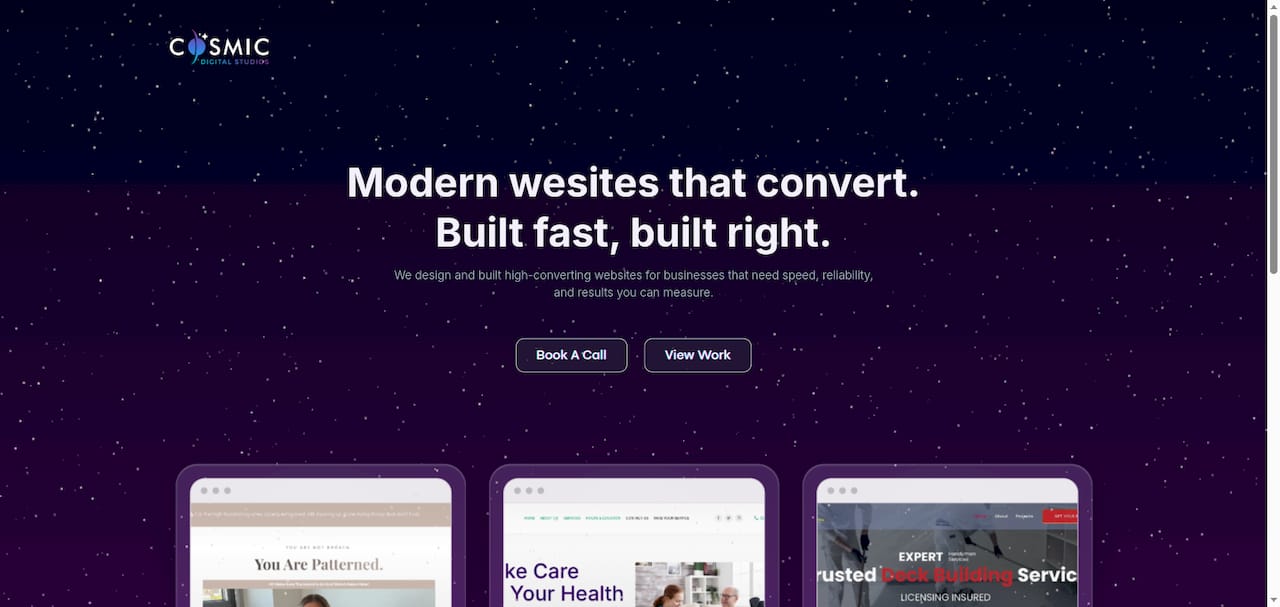
Cosmicdigitalstudios builds conversion-focused websites and referral landing pages designed to turn referred visitors into booked calls and paying clients. Every build includes fast load speeds, clear messaging, and a layout that guides visitors toward one action. If your current site is losing the referrals your partners are sending you, a website redesign built around conversion is the most direct fix. Clean design. Strong messaging. Real results.
FAQ
What is referral traffic and why does it matter?
Referral traffic is any visit to your website that comes from a link on another site, not from search engines or direct visits. It matters because referred visitors arrive with a built-in level of trust from the source that sent them, which typically produces higher conversion rates than cold traffic.
How do I set up a referral program for my website?
Create a dedicated referral landing page, assign unique referral URLs to each advocate, define a double-sided incentive, and automate reward fulfillment through your CRM or email platform. Promote the program across email, post-purchase pages, and social media from day one.
How long does it take to see results from website referral strategies?
Businesses that apply systematic referral strategies can see meaningful growth in qualified referral sessions within 90 days. Results compound over time as each new referral source makes future link acquisition easier.
What metrics should I track for my referral program?
Track engaged sessions, time on referral landing page, and conversion rate. Raw click volume is a misleading metric. A qualified referral is a visitor who engages with your page and completes the desired action.
How often should I update my referral program?
Refresh your referral messaging and offer framing every 3–4 weeks to prevent program fatigue. Review partner performance monthly and prioritize outreach to your top-performing referral sources.