
The best landscaping company websites are defined by three things: a strong visual portfolio, clear service segmentation, and trust signals that turn visitors into booked clients. If you are a business owner or marketing professional looking for proven landscape business website ideas, studying what top sites do right is the fastest way to build your own. This article breaks down the features, layouts, and real-world examples that separate professional landscaping sites from forgettable ones.
What makes examples of landscaping company websites effective?
The foundation of every high-performing landscaping website is visual proof. Before and after project photos are the single most persuasive content type on professional landscaping sites. They answer the client’s core question before they even pick up the phone.
Beyond photos, the best landscaping company websites share five structural traits:
- High-quality photography and video. Drone footage, time-lapse installs, and seasonal shots show the full scope of your work.
- Dedicated service pages. Separating services into individual pages improves both visitor clarity and search engine rankings.
- Clear calls to action. Every page needs one primary action: call, request a quote, or book a consultation.
- Customer trust signals. Testimonials, awards, and years in business reduce hesitation and build confidence.
- Mobile responsiveness and fast load times. Mobile-friendly, fast-loading sites deliver better user experience and higher conversion rates.
Pro Tip: Place your primary call to action above the fold on the homepage. Visitors who have to scroll to find a contact button often leave without acting.
Top 10 examples of landscaping company websites and what they do well

1. A Blade of Grass
A Blade of Grass serves the Greater Boston area and has built its website around a philosophy of long-term stewardship rather than a simple service list. The site communicates over 30 years of experience through project narratives that describe how properties mature over time. That storytelling approach builds trust in a way that a basic services page never could.
2. CLC Landscape Design
CLC Landscape Design has delivered custom outdoor living solutions for over 50 years in Northern New Jersey. Their website centers the client’s lifestyle, not the company’s capabilities. Every gallery image is framed around how the finished space will be used, which makes the portfolio feel personal rather than promotional.
3. Green By Nature
Green By Nature uses green as a dominant brand color paired with white space and full-width image sliders. Color symbolism on landscaping sites reinforces brand values like eco-friendliness and sustainability before a visitor reads a single word. That visual shorthand does real marketing work.
4. NV Landscapes LLC
NV Landscapes LLC stands out among top landscaping portfolio sites by adding video case studies and live chat to their site. Video walkthroughs of completed projects answer questions that photos cannot. The chat function captures leads from visitors who are not ready to call but are ready to ask a question.
5. Sites built around Angi awards
Several of the best landscaping company websites display Angi awards and detailed client reviews prominently on their homepages. Trust signals like awards and reviews increase user confidence and push hesitant visitors toward conversion. Placing these above the fold means every visitor sees them, not just the ones who scroll.
6. Portfolio-first homepage layouts
Some of the strongest examples of garden design websites lead with a full-screen project gallery rather than a headline. This layout works because landscaping is a visual purchase. When a visitor sees a backyard that looks exactly like what they want, the sale is already halfway done.
7. Story-driven about pages
Landscaping firms that explain their design-to-construction process and commitment to environmental stewardship gain credibility that service lists cannot provide. The collaborative process, from initial site assessment through installation and seasonal maintenance, tells clients what working with you actually feels like. That narrative reduces the perceived risk of hiring.
8. Local expertise pages
Top landscaping portfolio sites often include location-specific content: regional plant guides, local climate considerations, and neighborhood project galleries. This content signals local authority to both visitors and search engines. A homeowner in a specific suburb is far more likely to contact a company that references their area by name.
9. Quote request forms with project details
High-converting landscaping sites replace generic contact forms with structured quote request forms. These forms ask about project type, budget range, and timeline. That specificity filters out low-intent visitors and gives your sales team the information they need before the first call.
10. Seasonal content and blog sections
Landscaping businesses with active blogs covering topics like spring lawn prep or fall aeration rank for more search terms and give visitors a reason to return. Regular content also signals to Google that the site is maintained and authoritative. Even four posts per year, timed to seasonal demand, make a measurable difference.
Comparing landscaping website layouts that drive engagement
Different layout types serve different business goals. The table below compares the most common structures used across professional landscaping sites.
| Layout type | Best for | Key strength | Conversion focus |
|---|---|---|---|
| Portfolio-first homepage | Design-focused firms | Immediate visual impact | Inspires emotional buy-in |
| Service-page-led structure | Multi-service companies | SEO and service clarity | Captures high-intent searches |
| Story-driven narrative layout | Premium or boutique firms | Brand differentiation | Builds long-term trust |
| Lead capture landing page | Paid ad campaigns | Single focused action | Maximizes form submissions |
The portfolio-first layout works best when your photography is exceptional. The service-page-led structure is the right call when you offer five or more distinct services and want to rank for each one separately. Story-driven layouts suit premium firms that compete on reputation rather than price. Lead capture pages belong in paid ad campaigns, not as your main site, because they sacrifice depth for conversion speed. For a deeper look at which structure fits your business, the guide on home service website layouts breaks down each option with real examples.
Homepage design sets the tone, but service pages close the deal. A homepage that impresses but links to vague service descriptions loses leads at the second click. Each service page needs its own headline, photo set, and call to action.
How to choose a landscaping website design that fits your goals
Start with your brand identity. A luxury estate landscaping firm and a residential lawn care company need completely different visual languages. Your website should reflect the clients you want, not just the clients you currently have.
Budget shapes your options. Custom-built sites give you full control over layout, messaging, and conversion flow. Template-based sites cost less upfront but often require workarounds that slow load times and limit your design. If you are weighing that decision, the local business website guide walks through both paths with honest trade-offs.
SEO and local marketing features are not optional extras. Your site needs a Google Business Profile link, location-specific service pages, and schema markup for local businesses. These elements determine whether you appear when someone searches for landscaping services in your city.
Pro Tip: Audit your top three local competitors’ websites before you build or redesign your own. Note what they do well and where they fall short. Your site should fill those gaps, not copy their strengths.
Prioritize features by their impact on lead conversion. A quote request form, a project gallery, and a mobile-optimized layout will generate more business than a custom animation or a complex mega-menu. Build the conversion path first, then add design details.
Key takeaways
The most effective landscaping websites combine visual proof, clear service structure, and trust signals into a single, fast-loading experience that guides visitors toward one action.
| Point | Details |
|---|---|
| Visual proof drives decisions | Before and after project photos are the most persuasive content on any landscaping site. |
| Service pages improve SEO | Separating services into individual pages helps visitors find what they need and boosts search rankings. |
| Trust signals reduce hesitation | Awards, reviews, and years in business placed above the fold increase visitor confidence. |
| Layout must match business goals | Portfolio-first layouts suit design firms; service-led structures work best for multi-service companies. |
| Mobile speed is non-negotiable | Fast, mobile-friendly sites convert more visitors and rank higher in local search results. |
What I have learned from studying the best landscaping sites
The pattern I keep seeing is this: the landscaping companies with the strongest websites stopped thinking of their site as a digital brochure. They treat it as a sales tool with a specific job to do.
The firms that stand out, like A Blade of Grass with its stewardship narrative or CLC Landscape Design with its lifestyle-centered galleries, made a deliberate choice to show clients what the experience of working with them feels like. That is harder to copy than a color scheme or a font choice.
The trend I find most underused is location-specific content. Most landscaping sites have one generic service area page. The firms that build individual pages for each city or neighborhood they serve consistently outrank their competitors in local search. It is not glamorous work, but it compounds over time.
The one thing I would push back on is the obsession with visual complexity. Parallax scrolling, animated counters, and video backgrounds look impressive in a design portfolio. On a real landscaping site, they slow load times and distract from the call to action. Clean, fast, and clear beats flashy every time. If you want to check whether your current site has these issues, the contractor website design mistakes guide is worth reading before you spend a dollar on redesign.
— Max
How Cosmicdigitalstudios builds landscaping websites that get results
Cosmicdigitalstudios specializes in building websites for service businesses that need to look professional and convert visitors into booked calls.
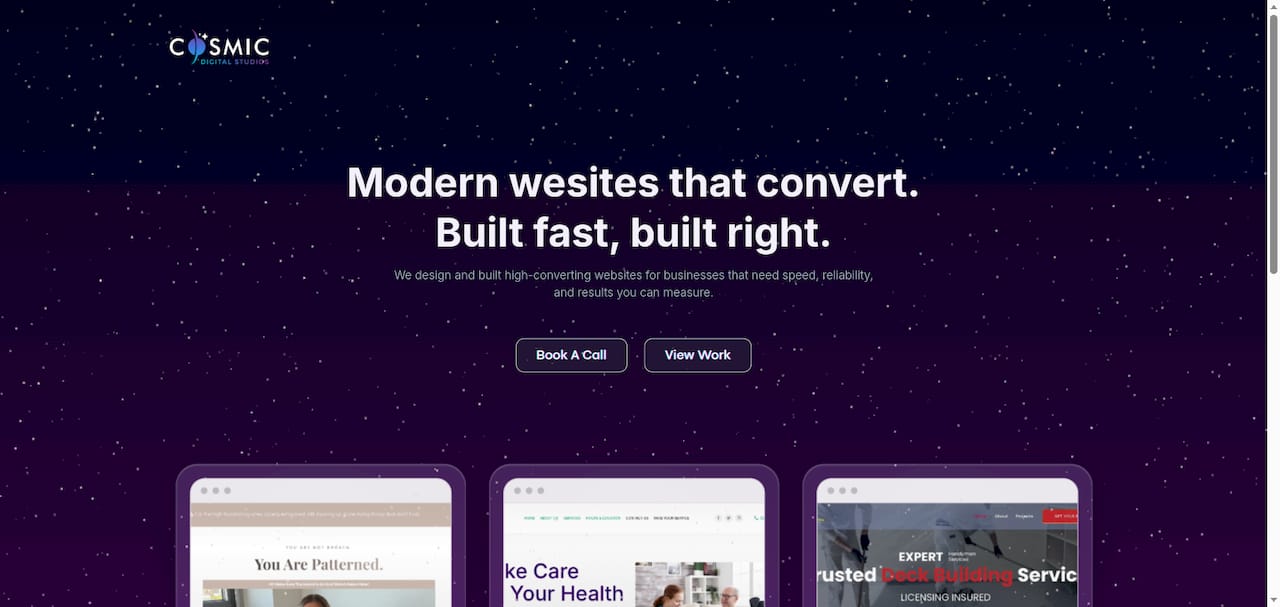
Every landscaping website Cosmicdigitalstudios builds is custom to your brand, fast on mobile, and structured around your specific conversion goals. Whether you need a full site with service pages and a project gallery or a focused lead generation funnel, the build starts with your business goals, not a template. If you are ready to see what a conversion-focused landscaping site looks like, visit Cosmicdigitalstudios to get started.
FAQ
What should a landscaping company website include?
A landscaping company website needs a project gallery, individual service pages, customer testimonials, and a clear quote request form. Mobile responsiveness and fast load times are required for both user experience and search rankings.
How many pages does a landscaping website need?
Most professional landscaping sites need at minimum a homepage, an about page, individual pages for each core service, a project gallery, and a contact page. Location-specific pages improve local search performance significantly.
What makes a landscaping website convert visitors into clients?
Trust signals like awards and reviews, before and after project photos, and a prominent call to action on every page are the three factors that most directly drive conversions on landscaping sites.
Should a landscaping company use a custom or template website?
Custom websites give you full control over layout, speed, and conversion flow, which matters when you are competing in a local market. Template sites are a reasonable starting point but often limit your ability to stand out or rank well in search.
How does storytelling help a landscaping website?
Landscaping firms that explain their design-to-construction process and long-term maintenance philosophy build credibility that a service list cannot. That narrative reduces the perceived risk of hiring and differentiates premium firms from lower-cost competitors.